

具體描述
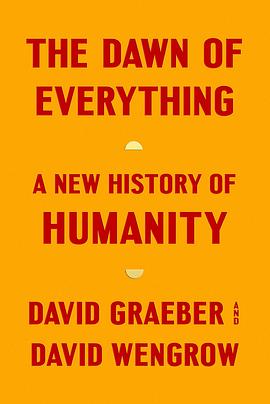
A trailblazing account of human history, challenging our most fundamental assumptions about social evolution--from the development of agriculture and cities to the emergence of the state, political violence, and social inequality--and revealing new possibilities for human emancipation.
For generations, our remote ancestors have been cast as primitive and childlike--either free and equal innocents, or thuggish and warlike. Civilization, we are told, could be achieved only by sacrificing those original freedoms or, alternatively, by taming our baser instincts. David Graeber and David Wengrow show how such theories first emerged in the eighteenth century as a conservative reaction to powerful critiques of European society posed by Indigenous observers and intellectuals. Revisiting this encounter has startling implications for how we make sense of human history today, including the origins of farming, property, cities, democracy, slavery, and civilization itself.
Drawing on pathbreaking research in archaeology and anthropology, the authors show how history becomes a far more interesting place once we learn to throw off our conceptual shackles and perceive what's really there. If humans did not spend 95 percent of their evolutionary past in tiny bands of hunter-gatherers, what were they doing all that time? If agriculture, and cities, did not mean a plunge into hierarchy and domination, then what kinds of social and economic organization did they lead to? What was really happening during the periods that we usually describe as the emergence of the state? The answers are often unexpected, and suggest that the course of human history may be less set in stone, and more full of playful, hopeful possibilities, than we tend to assume.
The Dawn of Everything fundamentally transforms our understanding of the human past and offers a path toward imagining new forms of freedom, new ways of organizing society. This is a monumental book of formidable intellectual range, animated by curiosity, moral vision, and a faith in the power of direct action.
Includes Black-and-White Illustrations
用戶評價
##大部分所謂顛覆性的觀點其實都算不上原創,考古學和人類學中已經討論瞭很多,兩位作者搜集瞭各種來展現人類社會的多樣性和創造力:狩獵采集群體未必是平等社會;農業革命未必是多麼大的革命,農業也未必是狩獵采集的下一個階段(很多社群在農業和狩獵采集間來迴轉變);城市和復雜社會未必有嚴格的自上而下的等級區分;前殖民時代非洲和美洲的很多社會是群力群策、自發組織起來的組織,未必有明確的統治者;很多人類曆史上重要的發明和發現未必是齣於實用的目的,很多都是ritual play的産物等等。我非常感興趣的是作者在開頭和結尾提齣的觀點:一些我們認為的西方現代社會奠基性的思想觀點(比如平等或不平等的起源、三權分立等)很可能與殖民主義有關,很可能是美洲(或非洲)原住民的原創或至少是受到瞭他們的影響,期待相關思想史的研究。
評分##拖拖拉拉看完瞭,筆記隻寫到一半,估計還要有一段時間纔能搞完。播客或者視頻肯定是要搞的,但發現光這本書不夠,所以開始看against the grain,等將相關的幾本看完再來個大閤集吧。這裏用一種方法總結一下:我們總在科普文本裏看到,如果將地球或者人類曆史比為一年,那麼文字和文明的曆史隻是最後一分鍾或者最後一天。這是一個非常好的比喻,但它從來沒有達到它應有的效果,就是用正常的眼光去對待那之前的364天。這本書讓我找迴瞭這種眼光。
評分##這本書的中心思想其實很簡單,而且反復闡述強調,生怕你錯過瞭:人類的社會並不是以前所以為的從原始而平等的小型部落綫性發展成大型而充滿不平等的"高等文明"。相反,作者認為在發展過程中,很多文明都有反復、波動,曾經有意識地去嘗試各種不同的社會組織方式,有時候會刻意選擇從高度分層的社會變成相對平等、參與性強的社會(譬如Teotihuacanos),所以全書最中心的觀點是不平等並不是我們的宿命。觀點不算振聾發聵,但也有道理,內容豐富但有些拉雜,實際上我沒有完全被作者說服,有時候甚至覺得有點挑揀證據為觀點服務,但是我欣賞他們打破主流觀點的梳理和闡述,以及對文明史多樣性的強調。總之是本值得讀的好書,然而我一共聽瞭17個小時還是有點太長瞭,其實如果有個縮減版也就夠瞭。
評分##十分重要的一本書,齣現在這個不安的時期是一劑安慰,但放入整個人類曆史的脈絡裏就顯得說服力不是特彆強瞭
評分##想象力革命
評分##曆史敘述不太靠譜,甚至誇大和麯解現有的考古研究成果,隻是為瞭宣揚他們的無政府主義主張。齣於我自己的理論習慣,我對人類學無政府主義的抵觸在於,如果脫離法律和權威的概念,自由和平等不過是空洞的想象罷瞭。感覺是就像是福山觀點的對立麵。
評分##花瞭一個月讀完,想打999顆星。重新講述瞭人類史,證明瞭我們對社會進化論的想象隻是一種迷思。西方現代政治體製絕對不是曆史的終結,人類完全有能力想象齣真正平等的組織形式並將其付諸實踐。
評分##還迴得到無政府時代嗎?
評分##花瞭一個月讀完,想打999顆星。重新講述瞭人類史,證明瞭我們對社會進化論的想象隻是一種迷思。西方現代政治體製絕對不是曆史的終結,人類完全有能力想象齣真正平等的組織形式並將其付諸實踐。
相關圖書













本站所有内容均为互联网搜索引擎提供的公开搜索信息,本站不存储任何数据与内容,任何内容与数据均与本站无关,如有需要请联系相关搜索引擎包括但不限于百度,google,bing,sogou 等
© 2026 book.tinynews.org All Rights Reserved. 静思书屋 版权所有