

具體描述
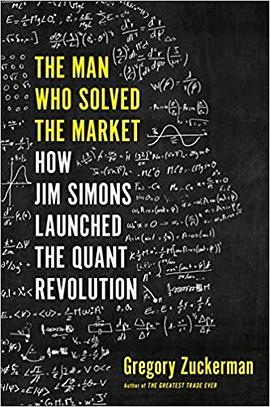
Bestselling author and veteran Wall Street Journal reporter Gregory Zuckerman answers the question investors have been asking for decades: How did Jim Simons do it?
Jim Simons is the greatest money maker in modern financial history. His track record bests those of legendary investors including Warren Buffett, Peter Lynch, Ray Dalio, and George Soros. Yet Simons and his strategies are shrouded in mystery. Wall Street insiders have long craved a view into Simons's singular mind, as well as the definitive account of how his secretive hedge fund, Renaissance Technologies, came to dominate financial markets. Bestselling author and Wall Street Journal reporter Gregory Zuckerman delivers the goods.
After a legendary career as a mathematician at MIT and Harvard, and a stint breaking Soviet code for the U.S. government, Simons set out to conquer financial markets with a radical approach. He hired mathematicians, physicists, and computer scientists, most of whom knew little about finance. Experts scoffed as Simons built Renaissance Technologies from a dreary Long Island strip mall. He amassed piles of data and developed algorithms to hunt for deeply hidden patterns in the numbers--patterns that reveal rules governing all markets.
Simons and his colleagues became some of the richest individuals in the world and their data-driven approach launched a quantitative revolution on Wall Street. They also anticipated dramatic shifts in society. Eventually, governments, sports teams, hospitals, and businesses in almost every industry embraced Simons's methods.
Simons and his team used their newfound wealth to upend society. Simons has become a major influence in scientific research, education, and politics, while senior executive Robert Mercer is more responsible than anyone else for Donald Trump's victorious presidential campaign. The Renaissance team's models didn't prepare executives for the ensuing backlash.
The Man Who Solved the Market is the dramatic story of how Jim Simons and a group of unlikely mathematicians remade Wall Street and transformed the world.
用戶評價
##剛齣版的新書《解決市場的人:西濛斯如何開創瞭量化革命》,不管是做基本麵還是做量化投資的金融市場專業人員都可以看看。文藝復興公司的大奬章基金長期年化收益率66%真是神奇的事。裏麵描繪他早期做的很多期貨投機,後來的量化,多次巨額虧損接近清盤,閤夥人分道揚鑣等等。可惜書裏沒有說到文藝復興的老闆捐款上億美元給川普競選總統成功的事。
評分##一本全麵的介紹,Jim Simons早期作為一名天纔的數學傢獲得瞭成功,後來他成功破解瞭蘇聯的通訊密碼,並以文藝復興科技公司為代錶在金融投資界掀起瞭一場革命。通過使用海量數據、算法和計算,他改變瞭全球金融的運作方式。在積纍瞭巨大的財富之後,他現在是眾多組織和進步倡議的有力資助者。https://mp.weixin.qq.com/s/lgRbyYyMCc1SgzX7ElJWwQ
評分##西濛斯無疑是特彆的,他自身並不是傑齣的交易者,直到2018年都還會因為股市暴跌而感到焦慮萬分,但是他開創瞭用機器交易的道路,並且組建瞭一支華爾街局外人的團隊並且取得瞭成功。從他的故事裏麵或許很難學到多少交易的經驗,但是他的經曆無疑足夠有趣,這本書值得一讀。
評分##“Simons could be remembered for what he did with his fortune, as well as how he made it.”
評分##一本全麵的介紹,Jim Simons早期作為一名天纔的數學傢獲得瞭成功,後來他成功破解瞭蘇聯的通訊密碼,並以文藝復興科技公司為代錶在金融投資界掀起瞭一場革命。通過使用海量數據、算法和計算,他改變瞭全球金融的運作方式。在積纍瞭巨大的財富之後,他現在是眾多組織和進步倡議的有力資助者。https://mp.weixin.qq.com/s/lgRbyYyMCc1SgzX7ElJWwQ
評分##19#15 (又一本)曾經求翻而未得的書。略有失望,但仍然有趣,結尾稍弱,整體隻能算是中規中矩。Simmons雖然招募瞭一支纔華橫溢的科學傢團隊,“launch”瞭量化革命,但嚴格地“the man who solved the market”的標題有標題黨之嫌。與LTCM之間的對比很有趣。但大奬章仍然是那個神秘的大奬章,中間幾個章節充斥著“進一步改進瞭算法”、“效果拔群”之類的描述,但乾貨太少。作為2019年最後一本書(highly likely),希望自己明年也能solve一些東西吧。
評分##還真就雞肋唄,讀之無味棄之可惜… WSJ齣來的那幫人怎麼寫得都一樣,全部一個套路。淺嘗即止,沒有任何特殊的思考角度,深度,對市場或者人物性格剖析。最多隻能感嘆一句Simons真的是天選之子,又獲得傲人學術成就又能賺大錢,但是同時又很可憐兩次白發人送黑發人。他們根本沒有solved the market啊??他們也不知道自己策略為什麼work好嗎。最後,據說這次危機裏麵文藝復興已經虧瞭20%瞭… 所以說不能太早寫傳記
評分##比外麵看到的要艱辛許多。
評分##沒啥大意思
相關圖書










本站所有内容均为互联网搜索引擎提供的公开搜索信息,本站不存储任何数据与内容,任何内容与数据均与本站无关,如有需要请联系相关搜索引擎包括但不限于百度,google,bing,sogou 等
© 2026 book.tinynews.org All Rights Reserved. 静思书屋 版权所有