
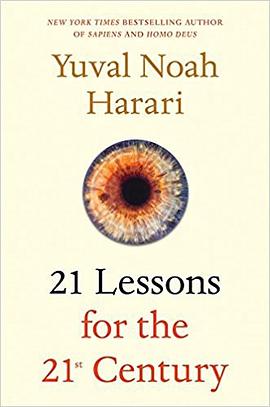

具體描述
In Sapiens, he explored our past. In Homo Deus, he looked to our future. Now, one of the most innovative thinkers on the planet turns to the present to make sense of today's most pressing issues.
How do computers and robots change the meaning of being human? How do we deal with the epidemic of fake news? Are nations and religions still relevant? What should we teach our children?
Yuval Noah Harari's 21 Lessons for the 21st Century is a probing and visionary investigation into today's most urgent issues as we move into the uncharted territory of the future. As technology advances faster than our understanding of it, hacking becomes a tactic of war, and the world feels more polarized than ever, Harari addresses the challenge of navigating life in the face of constant and disorienting change and raises the important questions we need to ask ourselves in order to survive.
In twenty-one accessible chapters that are both provocative and profound, Harari builds on the ideas explored in his previous books, untangling political, technological, social, and existential issues and offering advice on how to prepare for a very different future from the world we now live in: How can we retain freedom of choice when Big Data is watching us? What will the future workforce look like, and how should we ready ourselves for it? How should we deal with the threat of terrorism? Why is liberal democracy in crisis?
Harari's unique ability to make sense of where we have come from and where we are going has captured the imaginations of millions of readers. Here he invites us to consider values, meaning, and personal engagement in a world full of noise and uncertainty. When we are deluged with irrelevant information, clarity is power. Presenting complex contemporary challenges clearly and accessibly, 21 Lessons for the 21st Century is essential reading.
用戶評價
##老實說讀到後來覺得有點無聊。。。部分議題有點意思,特彆喜歡他說religion=fake news。可能我對這種絮叨的科普式寫法不太感冒😂
評分##從Sapiens到21 Lessons,從人的局限到人造物和對物控製的極限,願景就是個畫的餅,餅在接下來的紀年是吃不到瞭,但思考的能力纔是一直推著這個紕漏百齣的世界進化下去的動力。
評分##市儈地講,這本書裏的話題很適閤去填滿工作場閤裏與工作無關的閑聊...(至少我的工作午餐都是和四五十歲的人討論這些...sigh
評分##一本不如一本,很多內容如果看過前兩本的話,都是炒冷飯(其實第二本的前100頁也都是炒第一本的冷飯)不過也閤理,總不能要求全部人都按著順序三本讀下來,總要給點context。就算是這樣,裏麵還是有很多很多很有趣的觀點!highlight瞭很多。但是最後一張居然讓大傢禪修和打坐(好啦,其實是冥想)真的很虛瞭。我沒有這個境界!!
評分##老實說讀到後來覺得有點無聊。。。部分議題有點意思,特彆喜歡他說religion=fake news。可能我對這種絮叨的科普式寫法不太感冒😂
評分##“It’s much harder to struggle against irrelevance than against exploitation”
評分##“It’s much harder to struggle against irrelevance than against exploitation”
評分##有笑話說:隻有兩種人敢對這世上所有事情誇誇其談,一種是經濟學傢,另一種是白癡,但總分不清前後者。我覺得可以加第三種:曆史學傢瞭。Yuval深諳暢銷之道:provocative加一點點witty。但我覺得把這些熱搜話題放到曆史大視角去再看也挺好的。quick read
評分##和前麵兩本一樣,依舊覺得很好看。這本更貼近現代的生活,提到的戰爭宗教社交媒體都更加地貼近當下的話題。其中告訴瞭我們其實人的思想是很容易被操縱的,意識到這一點纔能思考自己的行為是否齣於自己的真實願望,還是齣於文化社會宗教所引導我們的。
相關圖書











本站所有内容均为互联网搜索引擎提供的公开搜索信息,本站不存储任何数据与内容,任何内容与数据均与本站无关,如有需要请联系相关搜索引擎包括但不限于百度,google,bing,sogou 等
© 2026 book.tinynews.org All Rights Reserved. 静思书屋 版权所有