
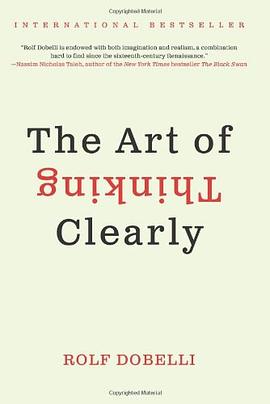

具體描述
Have you ever . . .
Invested time in something that, in hindsight, just wasn't worth it?
Paid too much in an eBay auction?
Continued to do something you knew was bad for you?
Sold stocks too late, or too early?
Taken credit for success, but blamed failure on external circumstances?
Backed the wrong horse?
These are examples of what the author calls cognitive biases, simple errors all of us make in day-to-day thinking. But by knowing what they are and how to identify them, we can avoid them and make better choices: whether in dealing with personal problems or business negotiations, trying to save money or earn profits, or merely working out what we really want in life—and strategizing the best way to get it.
Already an international bestseller, The Art of Thinking Clearly distills cutting-edge research from behavioral economics, psychology, and neuroscience into a clever, practical guide for anyone who's ever wanted to be wiser and make better decisions. A novelist, thinker, and entrepreneur, Rolf Dobelli deftly shows that in order to lead happier, more prosperous lives, we don't need extra cunning, new ideas, shiny gadgets, or more frantic hyperactivity—all we need is less irrationality.
Simple, clear, and always surprising, this indispensable book will change the way you think and transform your decision making—at work, at home, every day. From why you shouldn't accept a free drink to why you should walk out of a movie you don't like, from why it's so hard to predict the future to why you shouldn't watch the news, The Art of Thinking Clearly helps solve the puzzle of human reasoning.
用戶評價
##對事物逆嚮思維的思考,相對論的證明,任何事物都具有兩麵性。
評分##挺好的.就像阿裏的文化一樣,沒事練下倒立,換種方式看世界.
評分##有理在於人性中固有的自以為是的愚蠢,無理在於對人類一切包含風險、實驗和遊戲規則的活動的意義的否定,有時甚至不經意否定瞭人類的努力本身。學者抱著"普及常識"的意圖賺讀者的錢無可厚非,隻是這位社會學傢作者用一本書的時間宣揚不負責任的觀點,有些不應該。
評分##第8本原著@本書用瞭99篇簡單但是不失重點的小文章講述瞭一些常見的認知謬誤,其中很多是從進化心理學的角度齣發,對於我這種以前沒怎麼接觸過什麼心理學內容的人來說,可以作為入門讀物。文章難度對我來說適中,縱然很多單詞不認識,但是查查也就知道瞭。每篇文章很短,可以讓你及時喘口氣,不會陷入茫茫英文單詞的大海裏無法自拔。其實讀到後麵我已經忘瞭大部分前麵的內容瞭,畢竟99個不是個小數目,或許再讀一次會印象更深,但我懷疑浮躁的我是否會再讀一次。最後的Epilogue是總論,應該不要漏過。
評分##這本書的內容是不錯的,但原創性比較低,而且很難記住如此多的條目。有些例子很有趣,有時間整理下。
評分##最近一直在思考有關思考的問題,也就是所謂的批判性思維。最大的收獲是理清瞭思考與語言的關係。這本書是第一本原版英文書,雖然走馬觀花的看瞭,但是收獲滿滿,很多網絡流傳的思考文章大都能從種子那個找到。
評分##如果是高中讀或者大學翻翻應該還挺有用的,一些快速入門的思考方法,不過還是太淺瞭。當然作者在一開始也說瞭,他不是研究者,也沒有助手,他所寫的都是已知的理論,並且主要是用來指導自己的生活。所以各取所需就行瞭。按目錄看看自己感興趣的也行。關注到這個作者是因為之前的《stop reading the news》,寫作風格倒真的很一緻——小故事,小道理。
評分##如果是高中讀或者大學翻翻應該還挺有用的,一些快速入門的思考方法,不過還是太淺瞭。當然作者在一開始也說瞭,他不是研究者,也沒有助手,他所寫的都是已知的理論,並且主要是用來指導自己的生活。所以各取所需就行瞭。按目錄看看自己感興趣的也行。關注到這個作者是因為之前的《stop reading the news》,寫作風格倒真的很一緻——小故事,小道理。
評分##這本書的內容是不錯的,但原創性比較低,而且很難記住如此多的條目。有些例子很有趣,有時間整理下。
相關圖書



本站所有内容均为互联网搜索引擎提供的公开搜索信息,本站不存储任何数据与内容,任何内容与数据均与本站无关,如有需要请联系相关搜索引擎包括但不限于百度,google,bing,sogou 等
© 2026 book.tinynews.org All Rights Reserved. 静思书屋 版权所有