


具体描述
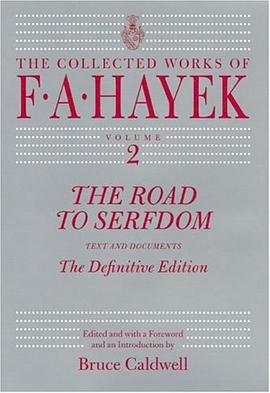
An unimpeachable classic work in political philosophy, intellectual and cultural history, and economics, The Road to Serfdom has inspired and infuriated politicians, scholars, and general readers for half a century. Originally published in 1944—when Eleanor Roosevelt supported the efforts of Stalin, and Albert Einstein subscribed lock, stock, and barrel to the socialist program— The Road to Serfdom was seen as heretical for its passionate warning against the dangers of state control over the means of production. For F. A. Hayek, the collectivist idea of empowering government with increasing economic control would lead not to a utopia but to the horrors of Nazi Germany and Fascist Italy.
First published by the University of Chicago Press on September 18, 1944, The Road to Serfdom garnered immediate, widespread attention. The first printing of 2,000 copies was exhausted instantly, and within six months more than 30,000 books were sold. In April 1945, Reader’s Digest published a condensed version of the book, and soon thereafter the Book-of-the-Month Club distributed thisedition to more than 600,000 readers. A perennial best seller, the book has sold 400,000 copies in the United States alone and has been translated into more than twenty languages, along the way becoming one of the most important and influential books of the century.
With this new edition, The Road to Serfdom takes its place in the series TheCollected Works of F. A. Hayek. The volume includes a foreword byseries editor and leading Hayek scholar Bruce Caldwell explaining the book's origins and publishinghistory and assessing common misinterpretations ofHayek's thought. Caldwell has also standardized and correctedHayek's references and added helpful new explanatory notes. Supplemented with an appendix of related materials ranging from prepublication reports on the initial manuscriptto forewords to earlier editions by John Chamberlain, Milton Friedman, and Hayek himself, this new edition of The Road to Serfdom will be the definitive version of Friedrich Hayek's enduring masterwork.
用户评价
##当年逐字逐句翻译的😭😭
评分##我们终将被我们的理想所奴役。
评分##未整理
评分##当年逐字逐句翻译的😭😭
评分##冷静而理智的分析,不因自我立场和所处环境而偏执。美中不足:未能揭示这场延续百年的理念之争的根源。PS:阶级斗争果然是降低社会熵值的大杀器,不得不佩服元首和舵手的顶层设计……
评分##写得真好,看得真累,,
评分##偷乐节 看完了《通往奴役之路》此次时刻 不要太应景了:今日种种荒谬 早就暗暗写好了注脚 哪里有什么中间道路哇
评分##未整理
评分##«Money is one of the greatest instruments of freedom ever invented by man.»
相关图书


本站所有内容均为互联网搜索引擎提供的公开搜索信息,本站不存储任何数据与内容,任何内容与数据均与本站无关,如有需要请联系相关搜索引擎包括但不限于百度,google,bing,sogou 等
© 2026 book.tinynews.org All Rights Reserved. 静思书屋 版权所有