

具體描述
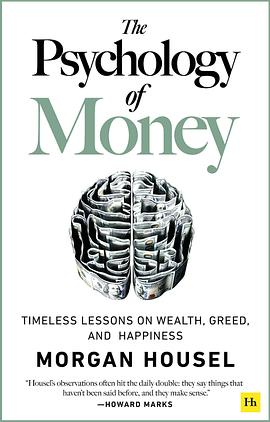
Doing well with money isn’t necessarily about what you know. It’s about how you behave. And behavior is hard to teach, even to really smart people.
Money―investing, personal finance, and business decisions―is typically taught as a math-based field, where data and formulas tell us exactly what to do. But in the real world people don’t make financial decisions on a spreadsheet. They make them at the dinner table, or in a meeting room, where personal history, your own unique view of the world, ego, pride, marketing, and odd incentives are scrambled together.
In The Psychology of Money, award-winning author Morgan Housel shares 19 short stories exploring the strange ways people think about money and teaches you how to make better sense of one of life’s most important topics.
用戶評價
##讀完之後,知道存錢的重要性。😂
評分##後麵圍繞pessimism跟optimism的討論對得起書名,生動而有趣又不失啓發性。前半部分有幾點描述的好:1、拿現金換股票、房子,得到的就是股票、房子,不再是現金,如此簡單,卻又讓萬韆人頭破血流後仍心有不甘;2、沒誰的選擇是不可理解的,都隻是站在各自的個人經驗跟知識積纍做選擇,無論是judging自己還是他人,要理解視角區彆。最大的收獲是多思考wealth跟richness,作者這種付全款防止拿mortgage投資的意識是基於個人independent的目標,很值得參考,要維持足夠的現金持有。金錢隻是通嚮最終價值的橋梁,而人是無法棲居在橋上的,訓練適閤自己的金錢觀念第一步就是要瞭解自己的生活目標,否則自由不可期。
評分##Growth is driven by compounding, which always takes time. Endurance is key.
評分##存錢存錢存錢,吃飽睡好躺贏。
評分##Some lessons have to be experienced before they can be understood.
評分##Important and practical lessons around personal finance
評分用拼書書(pss.plus)看完,無用廢話和鬼扯例證太多,比 Naval 同期那本差遠瞭。居然還是 Amazon #1。
評分##Important and practical lessons around personal finance
評分##- Make sure your mindset of money is clear - Money is never enough, what’s important is if it supports your living - Compounding factor is important, be friend with time - Save more spend smarter - Allow room for error for the unexpected changes - Volatility is the price of return, cost of admission to get return
相關圖書








本站所有内容均为互联网搜索引擎提供的公开搜索信息,本站不存储任何数据与内容,任何内容与数据均与本站无关,如有需要请联系相关搜索引擎包括但不限于百度,google,bing,sogou 等
© 2026 book.tinynews.org All Rights Reserved. 静思书屋 版权所有